
Games
Farmyard Heist
A 7×7 cluster-pays tumbling slot with multiplier spots, free spins and two bought features.
- RTP
- 96.65%
- Volatility
- 42.76
- Max win
- 50,000×
- Rungs
- 3
± 0.18 · rtp9658v2, base game
σ, the per-round standard deviation, in stake units
of one base bet, the round cap
96.65% / 95.36% / 94.61%
Press to load the full game in this frame. It waits for the press because the game engine is about two megabytes.
In motion
The big moments
Recorded off the Farmyard Heist cabinet at full speed. We picked these demo rounds for the show, so a win in them is not what a typical spin pays.
Where it can go
Read from the market packs the server applies, so it never lists a game as launchable where a launch would be refused.
May launch in 3 markets
- Great BritainGambling Commission · min_spin_ms ≥ 2500
- NetherlandsKansspelautoriteit · min_spin_ms ≥ 2500
- GermanyGemeinsame Glücksspielbehörde der Länder · min_spin_ms ≥ 5000
Pack drafted, regulation not yet read
- Maltaregulation not yet read
- Swedenregulation not yet read
- Denmarkregulation not yet read
A market is a row of rules the server applies to every launch. It is applied last, after every operator override, so a licensee cannot configure its way out of a constraint. Adding a market takes an insert and a certification, never a release. What each pack turns off →
The game, dimensioned
The grid the engine addresses, at its real proportions, with the title block of the pack it was drawn from. The cells, the lines and the signature are all read from the game; none of it is typed.
The figures
Read out of this game's measured evidence pack, which the measurement run writes itself.
- RTP
- 96.65% ± 0.18
- Volatility
- 42.76
- Max win
- 50,000×
- Hit frequency
- 32.20% ± 0.0026
- Max win probability
- 1 in 4.1m
- Feature frequency
- 1 in 302
- Layout
- 7×7, clusters of 5+
- Bet range
- €0.20 – €240.00
- Bought modes
- 5
- Evidence dated
- 24 Aug 2026
- Spins per mode
- 1,244,847,684
rtp9658v2, base game
σ, the per-round standard deviation, in stake units
of one base bet, the round cap
rounds that pay something, base game
base game · measured · 450 hits · 1 in 3.7m to 4.5m
free spins, base game
default ladder; an operator may narrow it
Ante Bet 5× · Super Spin 1 10× · Super Spin 2 250× · Buy Free Spins 100× · Buy Super Free Spins 500×
when this pack was produced, not when the game launched
sampled
What one round can cost you
- Maximum exposure, one round50,000× the stake, at the top of the default ladder (€240)
- €12,000,000
- Capped at €5 a spina Tier-1 licence override: one row in the database, not a new build
- €250,000
- Expected margin, base game1 − RTP, ± 0.18 pp at 95% confidence
- 3.35%
The RTP ladder
Operators in different markets are served different rungs, so we publish the whole ladder. Each rung is measured on its own evidence; none is inferred from the rung above.
| Profile | Return | Method | Pack |
|---|---|---|---|
| rtp9658v2lead | 96.65% ± 0.18 | n/a | Complete |
| rtp9553v2 | 95.36% ± 0.23 | n/a | Complete |
| rtp9452v2 | 94.61% ± 0.24 | n/a | Complete |
Every wager, and what it returns
Each mode is measured on its own. A bought round and a base spin are different products at different prices, and they do not return the same.
| Mode | Cost | Return | Method | Hit rate | Max win |
|---|---|---|---|---|---|
| Normal | 1× | 96.65% ± 0.18 | n/a | 32.20% | 1 in 4.1m |
| Ante Bet | 5× | 96.70% ± 0.18 | n/a | 33.60% | 1 in 144k |
| Super Spin 1 | 10× | 96.72% ± 0.20 | n/a | 49.94% | 1 in 567k |
| Super Spin 2 | 250× | 96.72% ± 0.20 | n/a | 47.08% | 1 in 34k |
| Buy Free Spins | 100× | 96.77% ± 0.22 | n/a | 99.89% | 1 in 16k |
| Buy Super Free Spins | 500× | 96.79% ± 0.21 | n/a | 99.89% | 1 in 4k |

How it plays
The symbols on the board, what they pay, and where the random numbers behind each round come from.
7 paying symbols, in paytable order
 Jlow
 Qlow
 Klow
 Ducklow
 Roosterhigh
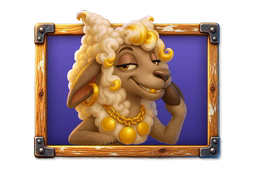 Sheephigh
 Golden eggshigh
and the ones that do something
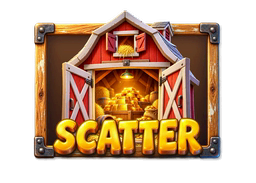 Barnscatter
 Rosettesuper scatter
The mechanic
Where the randomness comes from
See our fairness page for how to check it yourself.
Taking it live
What your integration lead needs to know. All of it is built and documented today.
- Integration
- One REST API, served in an iframe
- Wallet
- Wallet API v1, idempotent on our transaction id
- A timeout is
- Not a failure. A wallet call has three outcomes
- Game recall
- GLI-19 §4.14, built
- Interrupted round
- §4.16.3, resumed on the original key
- Currencies
- Any, in minor units. No floats anywhere
- Languages
- Rules and paytable per market, on the wire
- Sandbox
- A reference wallet, with deliberate faults
- Player data
- None. One opaque player_ref, by design
The rules of play, the paytable and the measured return per mode travel on /v1/session/open in every language we serve. They are enforced on every bet, whatever a client does with them, so a client holding its own copy cannot describe a game nobody is serving. This game is playable at /play/farm with no account needed.
Three ways to have it your way
Every operator asks for something to be different, usually late and usually as a condition. There are three ways to do it, and the first costs nothing.
A setting
~85% of what operators ask for
Bet levels, feature toggles, and which drawn skin your licence is served. It is a row in the database and goes live the same day. A key that is not declared on the version cannot be overridden: the write is refused.
A pinned build
When you are not ready to re-test
You stay on the version you tested while everybody else moves on. Different operators run different builds at the same time, at zero engineering cost, because a build is a row in the database and not a branch of the code.
A variant
Rare, and priced for the work involved
A real fork of the maths or the feature set, with its own calibration, evidence pack, certification and price.
There is no branch per operator and no build per market. That is why a new market takes an insert and a certification instead of a release, and why the twentieth licensee costs what the second one did.
What we decided, and why
Every game of this kind is built against a published reference. Where ours departs from it, we record the departure and the reason for it.
33of 36 claims met
3 claims depart from the published specification. Each one is listed below with what was expected and what this game does, as recorded in the pack.
paytable.scaleadvisoryThe specification1.000x the specification's absolute pays
This game3.457x, solved against the return, the hit rate, the feature frequency and the buy price. At 1.000x those four figures need a base game paying 2x whenever it pays; measured, this mechanic reaches 0.556x at the published hit rate and 1.279x at its maximum anywhere (hit rate 69.5%)
measured.maxWinFrequencyadvisoryThe specification1 in 10,000,000 ±15.0%
This game1 in 4,099,662 ±1 in 378,782 (-59.00%)
measured.volatilityadvisoryThe specificationvery_high
This gamecould not be checked
the published specification of a 7x7 cluster-pays design, read on 2026-08-14 from 4 sources (see src/math/reference-spec.ts)
Decided
The paytable's shape is the specification's; its scale is ours
Every ratio in the paytable (symbol against symbol, cluster size against cluster size) is exactly the reference specification's.
The whole table is then multiplied by one constant that the calibrator solves, and that constant is the deviation. It cannot be avoided, because the specification's absolute pays cannot hold at the same time as four of its own published figures. The buy costs 100x, so a bought round returns about 96.6x and a natural feature is worth about 96.6x. At one trigger in 310 that leaves 61.9% of stake for base-game clusters against a published 32.26% hit rate, which means a base game that must pay 2.0x every time it pays. Measured end to end, this mechanic pays 0.556x at that hit rate and never exceeds 1.279x anywhere on its curve. The source that prints the absolute pays also gets four of the six special-bet prices wrong; the four figures that pin the scale are corroborated by the vendor and by two independent reviews. Reported on every certification run as `paytable.scale`.
Decided
Conformance is checked by a run, not by a person
This used to be a table in a README with a tick in every row, audited once.
Two of the ticks were wrong by the time anyone looked again, and one row claimed a figure was asserted by the certification run that the run wrote into an appendix and never read. The specification is now data with a source and a read date on every figure, every claim is compared against the compiled maths or the measured evidence, and `npm run certify` fails on a blocking deviation. The count, and the ones that did not hold, are above this note.
Where this game stands
What is done, what comes next, and what a real-money launch is still waiting for.
- DoneThe maths, measured end to end4,031,365,270 rounds, by the engine that wrote this pack
- DoneThe published specification, checked claim by claim33 of 36 met, every deviation recorded with its reasoning
- DoneAn evidence pack per rung of the ladder3 of 3 complete
- DoneThe generator's own battery96 million draws against the real stream, composed across runs. The generator is shared, so the battery is re-run when the generator changes and never when a game does
- NextA laboratory engagementthe dossier is assembled and no laboratory has been engaged yet. What it needs is a purchase order, not engineering
- ThenA market certificate, per jurisdictionfour to eight weeks after submission, and the last step before a real launch
No laboratory has certified this game. Everything above is our own measurement, produced by our own engine. It has not been tested by GLI, BMM, eCOGRA or iTech Labs, it holds no market certificate in any environment, and the server refuses a real-money launch without one. The demo replays recorded rounds of this same measured maths, with no money in or out.
Taking it further
Want Farmyard Heist on your floor?
Tell us which markets you hold and which rung you need. We will send back the figure with its interval, the pack it came from and a realistic date, including one for the certificate, which does not exist yet.
hello@getawaygaming.com · To pass this game on to a colleague, send them /games/farmyard-heist/sheet.
More games
Three more you can play now, each with its own demo.
4,096 ways, 6×4

- Status
- Demo playable
Three guardians hold the sunken city down by its breath. Burst them with pearls and dive from the reef to the city, where the Deep Pot is banked in steps instead of risked whole.
Its return is a first probe, and every figure moves when the calibration lands.
Up to 20,736 ways, tumble, getaway
- Status
- Demo playable
A bank vault door is the board: a ring of sixteen turns clockwise around four falling tumblers, and three dials open it for the getaway.
Its maths is not calibrated yet: every pay and weight in the demo is a placeholder, so no evidence pack exists to read a figure from.